
Windows
Preface
This document will take you through the XYTE Connect+ Edge installation process using Docker Desktop for Windows.
This is the recommended method to get started with XYTE Connect+ Edge on Windows based systems. Please contact your XYTE Representative with any issues or questions.
Docker Engine is fully free for use by any customer type. The Docker Desktop is free only for personal use.
Supported Versions
Supported Windows OS Versions:
- Windows 10
- Pro / Enterprise / Education
- Home (with some limitations)
- Windows 11
- Pro / Enterprise / Education
- Home - with some limitations
- Windows Server 2022
- Via WSL2 (Not highly recommended).
Windows Server does not support a native way to run Linux based Docker containers and are not recommended for Edge deployments.
References
Docker Documentation:
Instructions
Enable Telnet within Windows
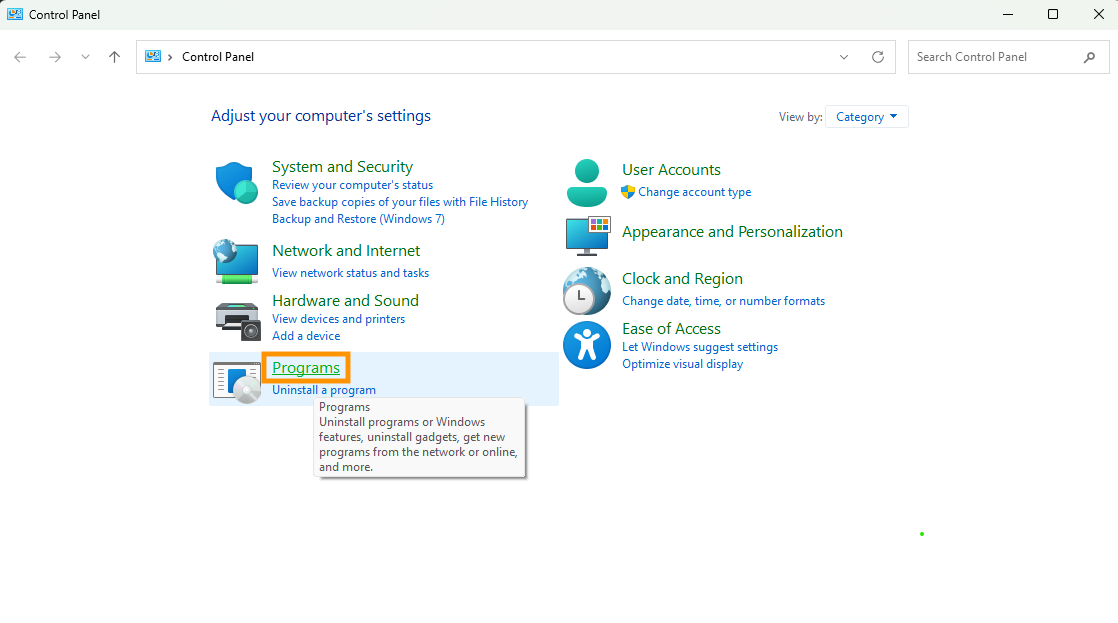
- Open Control Panel
- Select ‘Programs’
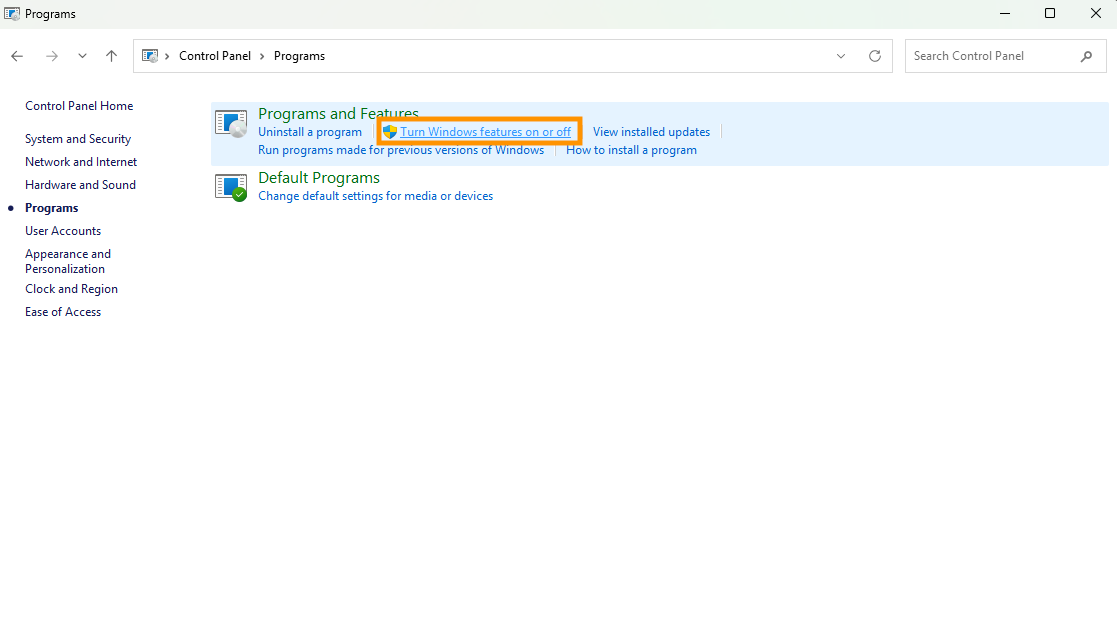
- Select the ‘Turn Windows Programs On and Off’ (Requires Administrator)
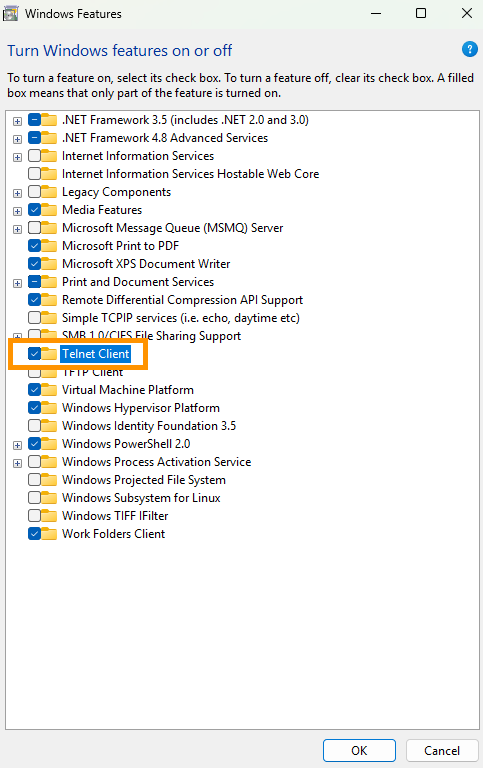
- Select ‘Telnet Client’ from the list
Install Docker Desktop
-
Download Docker Desktop Installer
- Requires Restart (complete previous Telnet step before restarting)
-
Upon Restart:
- Open Docker Desktop Application
- A new Command Prompt window should automatically open prompting installation of WSL
- Press any key in the Command Prompt window to continue
- Login to Docker not necessary, ‘skip’ may be selected on launch / setup
- Restart Docker within Docker Desktop window
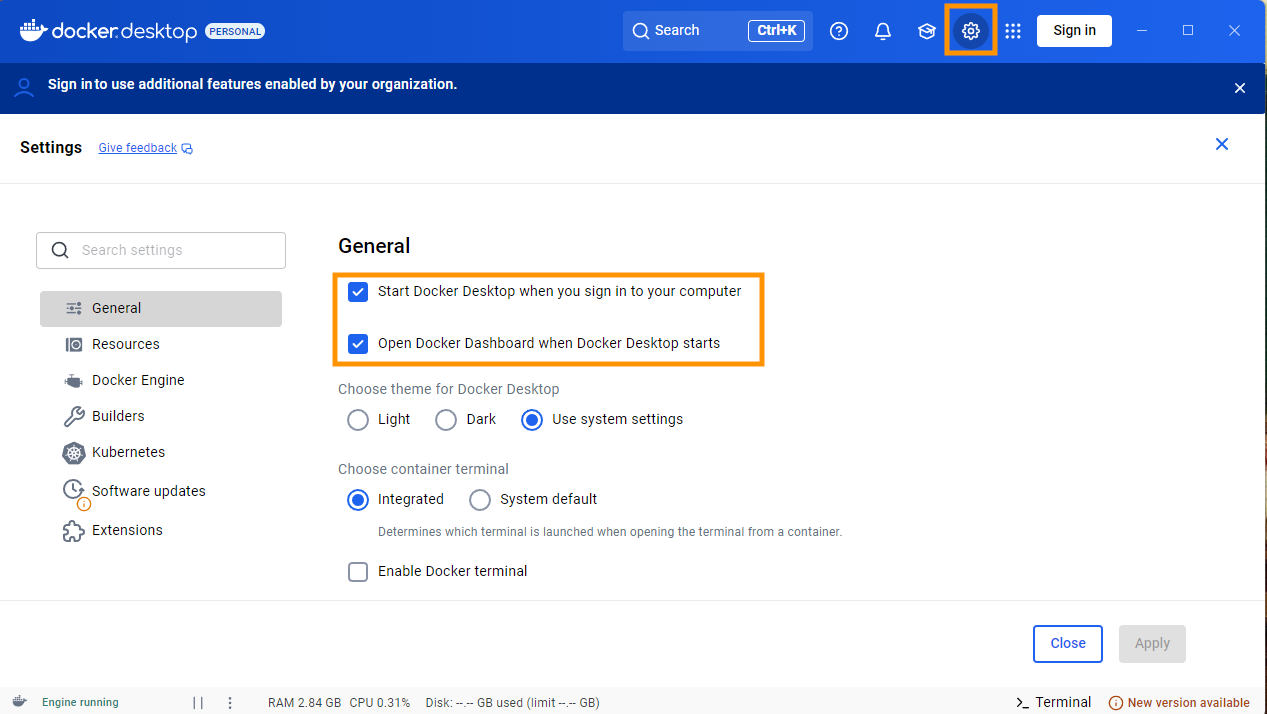
- In Docker Settings -> General -> Enable “Launch Docker Desktop on Login”
Configure Docker Engine DNS
Set a public DNS in Docker Engine so Docker can reliably reach Docker Hub to pull the Edge image. Skipping this can cause the Edge install to fail with a DNS / pull timeout (for example dial tcp: lookup auth.docker.io ... i/o timeout).
- In Docker Desktop, go to Settings -> Docker Engine.
- Add the
"dns"key to the JSON. The one thing that matters is adding the"dns"array -- your Docker Engine box may be empty or already contain other settings, so keep whatever is there and just merge"dns"in. Keep the JSON valid (comma-separate keys, no trailing comma).
The JSON below is only an example -- your existing content may look different. Do not replace the whole box; only add the"dns"block.
{
  "builder": {
    "gc": {
      "defaultKeepStorage": "20GB",
      "enabled": true
    }
  },
  "dns": [
    "8.8.8.8",
    "1.1.1.1",
    "8.8.4.4"
  ],
  "experimental": false
}
If your Docker Engine box is empty, it shows just {}. In that case, after adding only the DNS it will look like this:
{
  "dns": [
    "8.8.8.8",
    "1.1.1.1",
    "8.8.4.4"
  ]
}- Click Apply & Restart.
On restricted or corporate networks, use your organization's internal DNS server IPs instead of the public ones above.
Optional -- set it automatically via PowerShell:
$path = "$env:USERPROFILE\.docker\daemon.json"
$cfg = if (Test-Path $path) { Get-Content $path -Raw | ConvertFrom-Json } else { [pscustomobject]@{} }
$cfg | Add-Member -NotePropertyName dns -NotePropertyValue @("8.8.8.8","1.1.1.1","8.8.4.4") -Force
[System.IO.File]::WriteAllText($path, ($cfg | ConvertTo-Json -Depth 20))
Then restart Docker Desktop for the change to take effect.
Install Connect+ Edge
-
Open PowerShell
- If Powershell opens in the 'C:\windows\system32' folder, navigate to the current user folder
-
cd ~
-
Execute the following commands:
Invoke-WebRequest -Uri "https://raw.githubusercontent.com/xyte-io/edge/refs/heads/windows-main/edge_runner_script.ps1" -OutFile "edge_runner_script.ps1"

powershell -ExecutionPolicy Bypass .\edge_runner_script.ps1- Response return should appear as
Edge Id: xxxxxxxx-xxxx-xxxx-xxxx-xxxxxxxxxxxx- Register the Edge in the Xyte Portal
Next Step — Register the Edge in the Xyte PortalThe Xyte Portal is a separate web application — not part of Docker Desktop. Log in to your organization's Xyte Portal, navigate to Connections > Edges, and click Connect Edge to register the Edge ID you just generated.
For full instructions, see Claiming a local network device (Edge).
If you don't have portal access, contact your organization administrator.
Configure Docker to Load on Startup
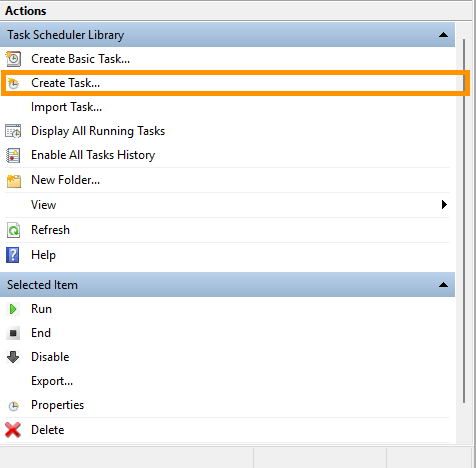
- Open Task Scheduler
- Select "Create Task..."
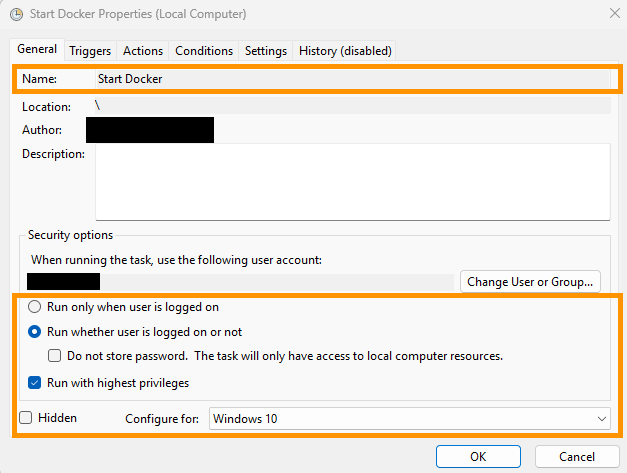
- General Tab:
- Name = "Start Docker"
- Run whether user is logged in or not
- Run with Highest Privileges
- Configure for Windows 10
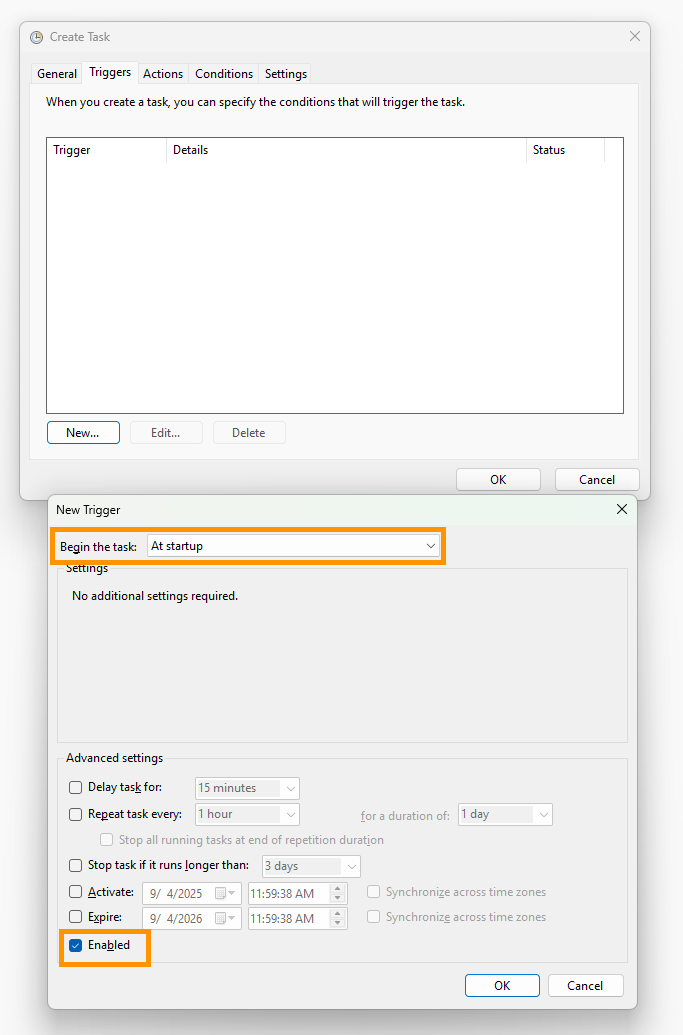
- Triggers Tab:
- Begin the task = "At startup"
- Advanced Settings = "Enabled"
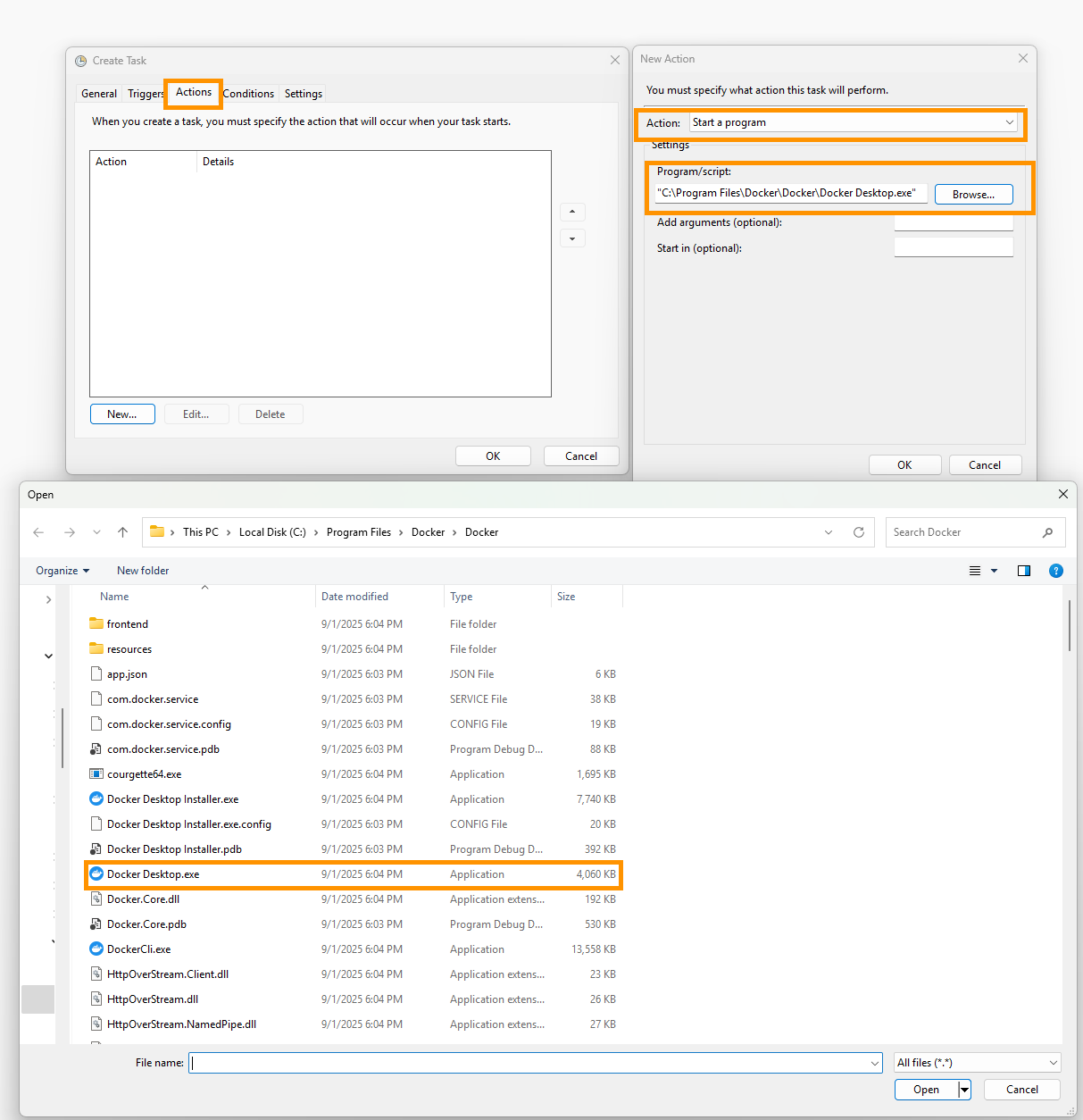
- Actions Tab:
- Action = "Start a program"
- Program/script = "Docker Desktop.exe"
- You will need you use Browse to find where the Docker folder was installed, the default will be "C:\Program Files\Docker\Docker\Docker Desktop.exe"
- Conditions
- If running on a laptop, be considerate of the AC Power and Battery options to your needs
Troubleshooting Docker Desktop issues
If you experience any issue after installing Docker Desktop, refer to Docker Desktop Issues for startup, engine, permissions, and Edge container troubleshooting steps.
FAQ
Windows session must stay logged-in
Logging out causes the Docker to be paused and stop working. Please ensure that the sessions is always active and Windows automatically boots to logged in state and starts the Docker engine after reboot.
Updated about 1 month ago