
Replace a device
How to replace a device.
Replace a device
In some cases, devices can be replaced without losing the device’s history and data in the cloud. The replacement flow happens when a broken device is replaced by another device of the exact same model or when an existing device is factory reset and loses all its settings.
Replace a device with a different one
You can replace a device with another one of the same model. On the device’s details screen, click Manage and select Replace device. You’ll need to provide either the serial number or the cloud ID of the new device — pick whichever identifier you have using the selector in the dialog. For device models that authenticate by cloud ID (for example, devices registered through a cloud agent), use the cloud ID.
Not available for Edge devicesReplace device isn't offered on devices monitored through an Edge agent, because they're identified by their network address rather than a serial number or cloud ID. To point an Edge device at a different unit, use Manage → Edit device IP / hostname instead. It also isn't offered on a device that sits under a parent device.
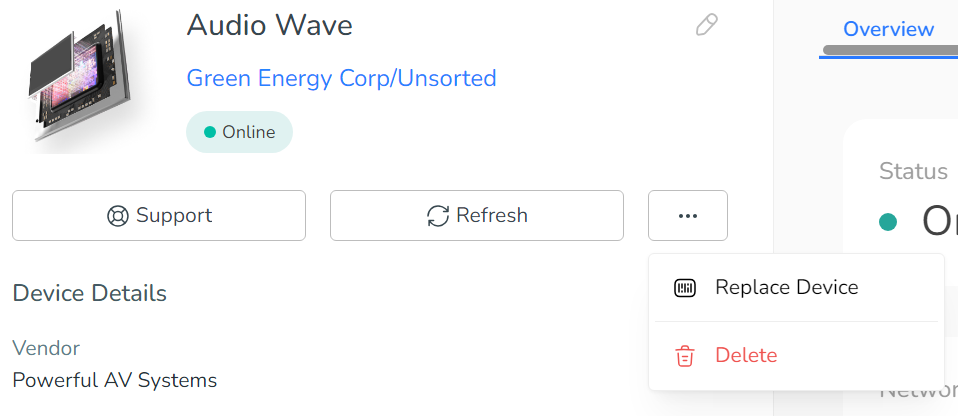
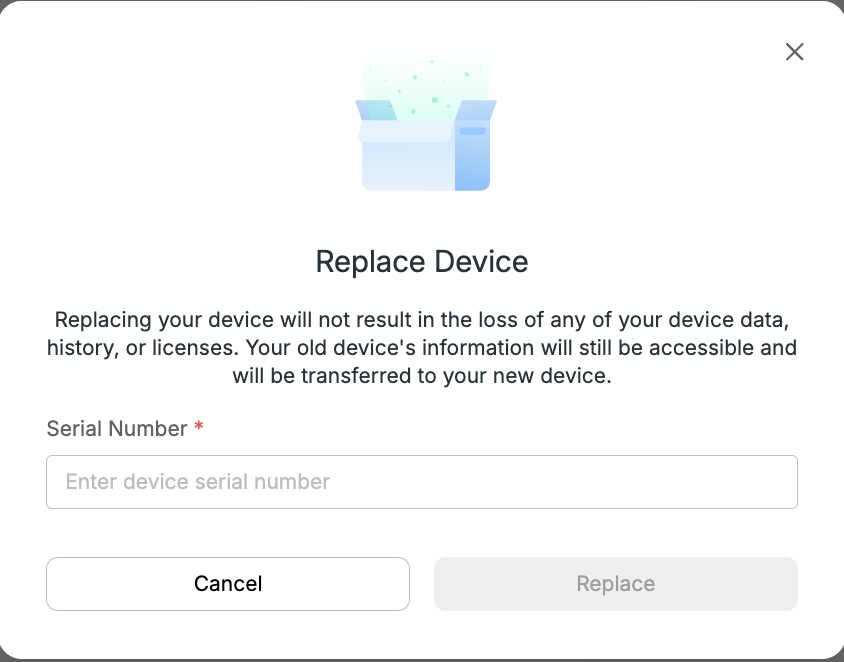
Once the new device connects to the internet (Registered but not claimed) and contacts the central server, it will replace the old device in the portal. The device's history and configuration are kept, but when you start the replacement most of its licenses are revoked — they stay with the device and re-activate once the new device connects (see What approving a replacement changes below). After the replacement, the old device will no longer be able to contact the cloud.
To verify that the replacement was successful, please check whether the serial number (or cloud ID) has been updated.
The identifier must match exactlyThe serial number / cloud ID you enter is matched against the value the replacement device reports when it registers. Surrounding whitespace is ignored, but the match is case-sensitive — enter the identifier exactly as printed on the device or shown by its agent.
Replacing with a device that is already registeredThe replacement completes when the new device registers with the cloud. If the replacement device has already been registered in the system (it appears in the portal or in the partner's device list), the pending replacement will not trigger. To replace with an already-registered device: set the replacement serial number / cloud ID to the new device's identifier as usual, then delete the new device from the system. The next time it connects it will re-register and the regular replacement flow will complete.
Replace a device that has undergone a factory reset
When a device is factory reset it loses its credentials, and when it tries to register again the platform rejects it, because a device with the same identity (cloud ID, or MAC address and serial number, depending on the model) is already registered. Instead of silently failing, the platform flags the existing device so an administrator can decide what to do.
On the Devices screen, a flagged device shows an orange Approval required badge next to its status in the Status column. Hovering over it shows: "This device was reset and is trying to register again. Open it to approve or dismiss." The badge and the message below are shown only to users with admin access to the device.
Open the device, and its details screen shows an Approval required message:
- Click Approve if this is the same physical device. The next time it registers, it reconnects to the existing device record and can re-authenticate with the platform.
- Click Dismiss if you do not recognize the request, and contact support to prevent unauthorized access. The device stays rejected. If it tries to register again, the Approval required badge comes back.
What approving a replacement changes
Approving a factory-reset device, or starting a replacement with Replace device, keeps the device's history and configuration, but also:
- Licenses: most licenses on the device are revoked but stay with the device, and are re-activated when it reconnects. They don't return to your pool of assignable licenses. Platform licenses that are in use stay active on the device.
- Commands: active commands on the device are aborted.
- Incidents: the device's open incidents are closed.
Updated 7 days ago